

Nick Pileggi: The Houseplant Boom, Burnout, and Finding Joy Again

Over the past decade, few people have documented the houseplant hobby quite as closely as Nick Pileggi. Known to many plant lovers as Philly Foliage, Nick has witnessed the rise of social media plant culture, the rare plant boom, the pandemic surge, and the quieter, more reflective hobby that exists today. Through it all, he has remained one of the most thoughtful and honest voices in the houseplant world.
Nick has spent years sharing his experiences as a collector, content creator, plant shop employee and enthusiastic observer of a hobby that has transformed dramatically during that time. He was there before houseplants became a social media phenomenon, witnessed the rare plant boom firsthand, and has watched the community evolve into what it is today.
Along the way, Nick built one of the most recognisable voices in the online houseplant world. His videos have always stood out for their honesty. Rather than simply showcasing perfect plants and picture perfect collections, he has been willing to discuss the realities of plant ownership, the pressures of creating content online, the mistakes, the lessons learned, and the changing nature of the hobby itself.
At Happy Houseplants, we've followed Nick's journey for many years and have always appreciated his thoughtful approach to plant collecting. While trends have come and gone, his enthusiasm for plants and the stories behind them has remained remarkably consistent.
What makes this conversation particularly interesting is that Nick has experienced almost every side of the modern houseplant world. He has worked in a plant shop, visited private collections and nurseries across the United States, collaborated with brands, built a successful YouTube channel, stepped away from content creation when he needed to prioritise his wellbeing, and returned with a renewed appreciation for the hobby.
In this interview, Nick reflects on the rise and fall of the houseplant boom, the reality behind rare plant collecting, the importance of light, the pressures of social media, and why enjoying plants is often very different from simply owning them.
Most importantly, he offers a thoughtful perspective on where the houseplant hobby has been and where it might be heading next. The following interview has been lightly edited for clarity and formatting.
You've documented the houseplant hobby through some extraordinary highs and lows. Looking back over the past decade, what do you think people have misunderstood most about the rise and fall of the houseplant boom?
The houseplant hobby has absolutely experienced quite the whirlwind over the last decade! I got my first plant in 2014 when I was 20 (a neighbor in college gave me a baby from her Aloe vera) and started collecting soon after. At first, the selection was slim. I remember feeling like I struck gold when I found a Philodendron ‘Micans’ and a Peperomia tetragona from a local plant shop back then. Quite literally everything about the hobby that I know today was different. The hype for houseplants was just simply not there.
I would say the vibe started to shift around 2018. “Fiddle leaf fig fever” was just beginning, and plants were starting to find their place on social media platforms like Instagram and YouTube. I had started my own plant accounts the year prior in 2017, but it was definitely a slow burn until mid-2018 when excitement for the hobby was finally gaining traction. Suddenly, it wasn’t just about what interested you, but what also interested others. And that’s when “rare” plants started to take over the scene.
It wasn’t until the COVID-19 pandemic that things really hit the fan. With everyone spending time at home, people tried new hobbies — one of the most notably being, of course, growing houseplants. Fueled by social media, people were learning about new plants left and right and feeling the need to collect them like Pokémon. And just like Pokémon, people were much more interested in collecting a rare Mewtwo than the ever-so-common Rattata. (Side note — I’m a huge Pokémon fan and it kind of pains me to use these cliché Gen 1 ‘mons as my example. But I digress.) They didn’t want your run-of-the-mill heart-leaf Philodendron anymore, they wanted the new rare variegated variety that they saw on Instagram last week.
But as they always say, “what goes up, must come down”. Popularity for the hobby began to die down once the world had started to open up again, and by 2023 the hype was essentially gone. Plant stores were closing down left and right — even still to this day, practically every time I go on Instagram I see a post from yet another plant store saying that they’re closing their doors. But even though the hype may not be there, the effects of the hype are certainly felt and have fully reshaped what the houseplant hobby is, and that’s what I think is truly the most misunderstood! The immense variety available, the fair prices, the quality of plants today… All of these are lingering effects from the houseplant boom. Plants have never been more accessible, and looking back on the way things were on the houseplant scene 10 years ago is simply night and day.

If somebody watches your videos today and sees a successful creator with a thriving collection, what parts of the journey would surprise them most?
Oh gosh, the whole thing, really! I started my YouTube channel back in 2017 when I was 22 years old. I didn’t have a college degree and was working at a bar here in Philly, and even though I was young, I felt like I had nowhere to go career-wise in life. I had been really into indoor gardening for a couple years at that point, and would look up stuff on YouTube about them, but there was barely any content available. Not knowing what I was doing whatsoever, I decided if no one was going to fill in the gap in this niche, I would! Because if I like plants, wouldn’t other people as well? As I mentioned, it was a slow burn at first. If I was lucky, my videos would get a couple thousand views. But after a little over six months, I reached 1,000 subscribers — never expecting it to get anywhere beyond 15K subscribers in the long term.
Around this time, I became really unhappy working my job at the bar and decided to give my two weeks notice that I was leaving, with nothing lined up beyond that. Near the end of that two weeks, I was sitting in the office doing some work with one of the managers from our sister restaurant, and she mentioned that she had heard that I was leaving the bar and asked what I was moving onto when my two weeks was up. I told her that I didn’t have a new job yet, but that I had recently started a YouTube channel and… she laughed right in my face! You admittedly have to have some level of delusion to work successfully on social media, but in that moment, the delusion felt REAL.
Over the next couple of months, I continued to work on my channel, even starting an Etsy shop where I sold houseplants and handmade macrame hangers to make ends meet. Just when I was feeling like I really had to figure things out, I got a phone call from a local plant shop; they were looking for a new shopkeeper, and had heard about me from one of their employees. Without hesitation, I accepted, and thus began my journey of truly working full-time with plants.
I only worked at that plant shop for a little over two years, still, it was the foundation of my career. But I think the most surprising part of my journey is what led up to it! Everyone on social media starts at 0 followers, and I think we forget that sometimes. That beginning stage is truly the most pivotal part of anyone’s journey!
You've visited countless growers, shops and private collections over the years. Was there a particular greenhouse, nursery or collection that completely changed the way you think about growing plants?
Immediately, there are two places that come to my mind. The summer before the pandemic, I met a woman out in the suburbs of Philadelphia who had been growing and collecting plants for decades. She had invited a friend and I to come walk through her private greenhouse, and after visiting, I was completely gobsmacked. This was the first time I was exposed to someone’s collection who wasn’t influenced whatsoever by what was trending online, but growing the plants that had simply sparked her interest over the years. Witnessing someone get so excited over a crested rabbit’s foot fern or a fuzzy Gesneriad instead of some “rare” Anthurium or Philodendron quite literally changed the way I looked at plants going forward.

There’s also a plant nursery in southern Delaware called Pepper’s Greenhouse that is forever ingrained in my brain. They have been a cornerstone of the plant hobby for decades, but became a little overshadowed in the new age of social media and online plant stores. However, these mom-and-pop nurseries are the true hidden gem of the plant community, often offering varieties that cannot easily be found elsewhere with prices that aren’t influenced whatsoever by online sellers. As someone who started their plant hobby in the mid 2010s, it’s not only reminiscent of what things were like back then, but gives an insight of what things were like even earlier than that, still showing the inescapable influence that the “original” plant craze of the 1970s brought. I just can’t help but have a major appreciation for that.
Having worked both behind the counter in a plant shop and in front of the camera on YouTube, what do people consistently get wrong about keeping houseplants?
Genuinely, lighting is the most misunderstood aspect of plant care. And I’m not just saying that because I currently work for a grow light company! This isn’t about to become a lesson on proper lighting, but every other aspect of plant care is completely obsolete if the lighting is subpar. Yellowing leaves? Root rot? Yes, overwatering might be the cause, but what causes overwatering? You guessed it: lack of light! If a plant isn’t receiving enough light to properly photosynthesize, moisture will stick around too long in the soil… AKA overwatering!
I used to just buy plants and place them wherever they looked good in my home, keeping in mind their overall care needs but forcing them to adapt to where I wanted. That’s just not how things work in the plant world. Plants are strong and plants want to live, but our homes, even at their best, are the worst conditions any plant we own will be experiencing during their entire lives. Most plants require “bright, indirect light” (one of the most misunderstood phrases used in the plant community) in order to properly process water, otherwise it will experience some of the many issues that overwatering can cause. Not to mention, lack of light can slow growth way down and cause leaf deformities.
If you want your plants to look Instagram-ready, you truly need to provide them with enough light. Most of my plants are kept around the windows or underneath grow lights. But if you want to grow a plant in medium to low light (not “no light”!!), it’s best to slowly acclimate it to those conditions. It makes total sense that if you take a plant from a greenhouse where it’s been thriving and then put it in a dark, dry corner in your kitchen, it’s not going to handle things well. Take things one step at a time — start it out in bright indirect light, then ease it into those lower light conditions over the course of a few weeks.

During the height of the rare plant boom, some plants reached astonishing prices and levels of hype. Looking back now, what do you think that period revealed about the houseplant hobby and the people within it?
There is seriously so much to learn from that period! I always think of the Pilea peperomioides as the prime example of one of those plants. I’m sure you remember, but plant collectors who got into the hobby during or after the pandemic would likely be very surprised to learn that this ever-so-common houseplant that only costs a few dollars used to be so immensely sought after and incredibly elusive, at least in the United States. It was truly the original “it” plant of the houseplant resurgence. In 2016 or 2017, you could only be so lucky to find a small 2” pot with a single baby plant for maybe $50 at best, and unless you knew someone with one, you probably had to order it online. In 2018, suddenly, every plant store in the US had them for about half the price, and by 2020, they cost the same as a standard Pothos. Yes, it might just be classic supply and demand, but the houseplant hobby makes economics quite fascinating when you actually watch it happen firsthand.

Truth is, us plant collectors are the ones who decide what each of these plants are worth. Plant sellers can set whatever price they want for them, just as long as we’ll pay for it. There have been been particular houseplants that earned their way to “it” plant status on their own merit (like the beautiful Monstera ’Thai Constellation’ that took years for mass cultivation, holding onto the hype the whole time), and ones that have felt like, excuse the pun, industry plants in the “it” plant world — I’m looking at you, Philodendron ‘Birkin’.
I’d bet my top dollar that most of the folks who fell for plants like the Philodendron ‘Birkin’ (at launch, that is, when it was well over $100+) are the ones who quickly fell out of the plant hobby post-pandemic. Which is, in all honesty, a total relief. These days, the plant community is full of those who are not just in it for the hype, but for the genuine love of plants, and it really shows! Plant variety has increased, prices are down, and enjoyment for the hobby is at its highest, even if the viral hype on social media is gone. Now, the houseplant community truly feels more close-knit than it ever has before.
After creating content for many years, there was a period where you stepped away from YouTube. Looking back, what did that time away teach you about yourself, your relationship with plants, and the pressures of creating content online?
I’ve fully stepped away a few times now… My first break came after a rough move to a new apartment that had lots of issues, and I needed to prioritize my mental health. During that initial break, I actually got hired by Soltech, a grow light company based just outside of Philadelphia. I had done some projects with them prior, and they were looking for a content creator, so it felt almost like a new chapter for me. Of course, I didn’t want to fully leave behind my YouTube channel that I had worked so hard on building. So, after a little while, I started making my own content again, but it was a bit short-lived as I had a hard time balancing both endeavors, so I stepped away again. Months later, the same cycle repeated itself. Finally, this year, I can proudly say I’ve learned to do the balancing act between the two.
But, that time away from YouTube was crucial. There was a lot of time to reflect and also think about how I would do things differently. What probably changed the most is the way I think about how content performs. I’m not going to lie, it was kind of a hard pill to swallow coming back after my first break (after the plant hype from the pandemic had really slowed down) and seeing the difference in the amount of views my YouTube videos were getting. It really took for my last break to happen for me to learn to just let go of that and just have fun. I make the videos I want to make, I talk about the topics I want to talk about, and if it “flops”, who cares? I had fun doing the project, so that’s all that matters to me, regardless how many people it resonates with. Letting go of all that concern has also allowed me to truly be myself when I film. Nine years after starting my channel, I think that’s about time! It’s really the little things, too. I’m a fast talker and I’ll trip over my words every once in a while. Before I’d get frustrated with myself and redo what I was trying to say. Now, I’ll just make a quip and move on. I think now it’s so much more important to be imperfectly yourself than trying to act perfect.
Many collectors spend years chasing the next rare plant. Was there a particular moment when you realised that owning plants and enjoying plants weren't necessarily the same thing?
My relationship with plants has changed A LOT in the last few years. Things got a little out of hand once I was working at the plant shop — I was bringing home new plants left and right, and doing unboxing videos on YouTube pretty often, receiving plants from different companies to share with my audience. It’s one thing when you pick out your own plants and are spending your own money on them, and not to sound like I took it for granted, but there’s something about receiving plants that you didn’t ask nor pay for that really depletes their sentimental value.
As we talked about, I did step away from YouTube a couple times, and since then, I haven’t really been working with companies in the way that I used to. Over the last two years or so, my relationship with plants has been reverting back to the way it was originally. Spending my own money on my plants and carefully curating the ones I bring home, the joy has fully returned. Every single plant I acquire really means something special to me now, which makes me want to see them thrive that much more.
And I have to mention, now that I’ve been back on YouTube for a few months, those companies I used to work with have been creeping their way through the cracks back into my DMs. And of course, I’m a big fan of most of these companies at this point, so I do want to work with them, but I’m keeping this feeling that I currently have for plant collecting very close to my heart and am going to make sure it stays this way.

Houseplants are often presented as a hobby, but for many people they become something much deeper. What role have plants played during the more challenging periods of your life?
Plants serve as a constant reminder that we, too, are always growing! There have been some real stagnant eras of my life, but even when I’ve felt like I’ve stalled, my plants just keep on growing. That in itself has been motivation for me. Especially plants that have been on the brink of death that, with the right energy and adequate care, can one day be healthy and beautiful once again. There really is magic in that.
However, there’s also plant fatigue. I keep around 250 plants in my two bedroom apartment, and there have been weeks where I just don’t want to lift a finger for them. It hasn’t been too extreme — I’ve heard horror stories of people neglecting their plant collections to the point that they all are left for dead — but when I can tell I’m neglecting my plants, I take that as a sign that I need to take care of myself better, too. Whether it’s taking more time to relax or shifting my perspective to get me back to a positive headspace, it’s essentially a way for me to keep myself in check — similar to when you check to see if one of your plants needs to be watered. Caring for plants isn’t just good for my plants, but it’s good for me, too!

If you could go back and give one piece of advice to the version of yourself who uploaded those early Philly Foliage videos, what would it be?
Truly to just be yourself! That’s what so many people say about doing social media, but it’s so true. I was actually recently inspired by something in particular that I saw on TV. I’m a huge fan of RuPaul’s Drag Race, and my partner and I were at a viewing party for an episode earlier this year (shoutout to DD Fuego and Philadelphia’s own Mandy Mango for hosting this event, they were AMAZING!) and there was something said during that episode that quite literally changed my perspective. The incredible Nini Coco was talking with RuPaul about how she always imagines the worst-case scenario about every event in life and how much that holds her back, but in this particular challenge, she let all of that go, and she won! RuPaul said something along the lines of how amazing things happen when you just let go, and I just really saw myself in Nini in that moment, more than I ever have with anything else I’ve seen on TV. I would ALWAYS think about the worst case scenario, especially with my career, and that has always held me back.
This had happened during my recent hiatus from YouTube, and I really sat and marinated on that conversation for a few weeks. No matter how produced it may or may not have been, there was so much truth in it, and that alone inspired me to get back into content creation and has allowed me to be more myself than ever before. Sometimes, making content really felt like pulling teeth. It no longer feels that way, at all. I really do wish I could have heard that conversation years ago!
Imagine we're sitting here again in ten years' time. What do you think the houseplant world will look like in 2036, and what would you most like your own contribution to that world to have been?
Some might refer to me as an “influencer” in the plant world, but I definitely vibe more with being a “deinfluencer”. Trends have ruled this hobby with an iron fist, and I feel (or at least hope!) that I’ve always been an advocate for buying the plants that you personally enjoy, instead of the ones that others are enjoying. Most content creators I see strive to push excitement towards certain plants to catch more and more people’s attention, but I’m equally as excited to share which plants I think should be avoided like the plague and, maybe more importantly, “what not to do” when caring for plants instead of just a “how to”.
Beyond that, I find so much joy in sharing lesser-known houseplants that are more often passed over for other more popular varieties. In a world oversaturated by variegated Aroids, I find the most excitement in showcasing plants like Gesneriads or Peperomias (a personal favorite of mine!) that just don’t get the attention they deserve. In no way am I trying to disrupt the norms of the plant community, but to hopefully inspire some to simply move beyond those norms. I wholeheartedly believe that is the way to discover your own niche within the plant hobby. Who knows? Underrated plants like Haworthia or Episcia might just be your bread and butter, but you have no way of knowing until you expand your horizons!
But what will the houseplant world look like in 10 years? Only time will tell, but I do think plants have entered the mainstream and will continue their way down the path they’re already on, production wise. Even as any leftover hype from the pandemic completely evaporates, people who have never thought about owning a plant before are going to get drawn in as they walk by the plant section at their nearby grocery or hardware store. They’ll see a beautiful variegated Monstera or Pink Princess Philodendron, feel the need to care for it and decorate their home with it, they’ll be able to buy it for $20 or less, and thus begin the journey of another plant parent. That probably wouldn’t have happened if the excitement for these plants didn’t lead to their mass production in the first place. The effects of the houseplant boom of the early 2020s are truly going to be felt forever!

One of the things we enjoyed most about this conversation was Nick's ability to look beyond trends and remember what drew so many of us to plants in the first place. While social media, rare plant booms and changing fashions have all shaped the hobby, his answers repeatedly return to something much simpler: curiosity, enjoyment and a genuine appreciation for plants themselves.
Perhaps the most encouraging takeaway is that while the hype may have faded, the houseplant community remains stronger, more knowledgeable and more diverse than ever. The plants that once felt impossible to find are now widely available, information is easier to access, and new generations of plant lovers continue to discover the hobby every day.
For anyone who has ever worried that they were falling behind, buying the wrong plants, or not keeping up with the latest trend, Nick offers a timely reminder that the best collection is simply the one that brings you joy.
We'd like to thank Nick for sharing his time, experiences and reflections with the Happy Houseplants community. One thought that stayed with us after the interview is that, while many of us first discovered Nick through his plants, it is really Nick himself that people have continued to follow over the years. The plants may have brought viewers to his channel, but his honesty, humour and willingness to share both successes and setbacks are what kept them watching. Whether his future content focuses on plants, life in Philadelphia, or something entirely different, we suspect many of us will still be tuning in.
Conversations like this remind us that behind every collection is a story, and behind every plant lover is a journey that rarely follows a straight line.
About Nick Pileggi
Nick Pileggi is a houseplant content creator, educator and plant enthusiast based in Philadelphia, Pennsylvania. Best known through his YouTube channel, Philly Foliage, Nick has spent nearly a decade documenting the ever-changing world of houseplants, from rare plant crazes and collector culture to practical growing advice and the simple joys of living with plants.
Known for his honest, thoughtful and often humorous approach, Nick has built a loyal following by sharing both the successes and challenges that come with being a plant parent. Whether he's touring a remarkable greenhouse, discussing the latest trends, or championing an overlooked plant that deserves more attention, his enthusiasm for the hobby is always evident.
Over the years he has become one of the most recognisable and respected voices in the online houseplant community, known for encouraging collectors to think beyond trends and discover what they genuinely enjoy growing.

Where to Follow Nick
If this interview has left you wanting to spend more time in Nick's world, you're in luck. Through his YouTube channel, Philly Foliage, he continues to share the same thoughtful, honest and often humorous perspective that has made him such a respected voice in the plant community. From plant tours and collector stories to care advice and reflections on the changing hobby, there's something there for every plant lover.
YouTube: Philly Foliage
Instagram: @phillyfoliage
And if you're anything like us, you'll probably find yourself watching far more videos than you originally intended. That's certainly what happened to us.
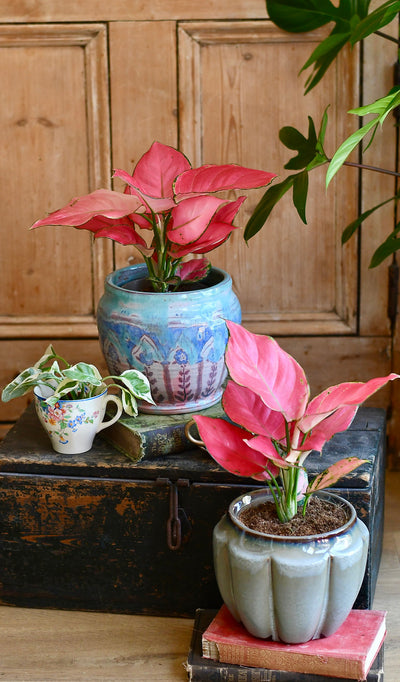
All photographs © Nick Pileggi. Reproduced with permission.




Leave a comment