



Monstera deliciosa (Swiss Cheese Plant) Care Guide
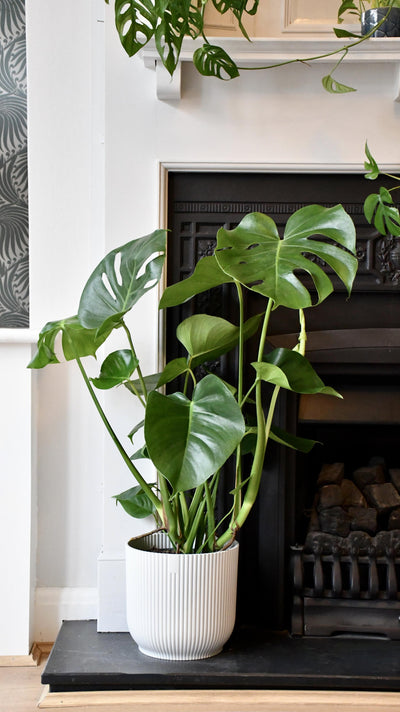
Few houseplants make a room feel alive quite like Monstera deliciosa. With bold, glossy leaves that split and perforate as they mature, the Swiss Cheese Plant has become a modern classic. It brings an instant sense of greenery and scale to a space, either climbing upwards or spreading gently as a statement floor plant.
Despite its tropical look, Monstera deliciosa is forgiving and adaptable. Once it finds a bright home and a simple watering rhythm, it grows steadily and rewards you with new leaves that seem to unfurl overnight. We often see the same Monsteras return to us years later, taller and fuller, with stories of new rooms and new homes. It is a plant that grows with you.

Buy Monstera deliciosa from Happy Houseplants here
https://www.happyhouseplants.co.uk/products/monstera-deliciosa-swiss-cheese-plant?_pos=1&_psq=monstera-del&_ss=e&_v=1.0
Monstera light
Bright indirect light is ideal. A place near a window where sunlight is bright but not hitting the plant directly keeps leaves healthy and encourages natural splits. Too much harsh sun can scorch foliage, while deep shade leads to smaller leaves without holes.
If your Monstera produces small, heart-shaped leaves with no fenestration, it is asking for more light.
Monstera watering
Allow the top third of the compost to dry before watering again. Monsteras appreciate moisture but do not tolerate sitting in wet soil. Water slowly and thoroughly, then allow excess to drain away.
In winter, watering naturally slows. Drooping leaves can indicate either underwatering or prolonged dryness, so always check the soil rather than guessing.
Monstera humidity
Average home humidity is fine, though the plant grows more vigorously in slightly more humid rooms. It does not require misting. If air becomes very dry in winter, moving it away from radiators is more helpful than increasing humidity artificially.
Monstera temperature
Eighteen to twenty six degrees suits this plant well. Avoid cold draughts, sudden chills and unheated conservatories in winter. Warm rooms and stable temperatures encourage larger leaves.
Monstera soil and repotting
Use a well draining indoor mix. Monsteras enjoy slightly airy compost with ingredients like bark or perlite to help water move through.
Repot every two to three years or when roots appear at the base of the pot. Move up just one size at a time; oversized pots remain wet for too long. Spring is the best moment for repotting.

Monstera feeding
Feed every three to four weeks during spring and summer using a balanced liquid fertiliser. Pause feeding in winter when daylight is at its lowest.
Monstera growth habit and moss poles
Monsteras are natural climbers. As they mature, they begin to form aerial roots that seek something to cling to.
Providing a moss pole or sturdy support encourages upright growth and larger splits. The plant can also be trained sideways for a wide, spreading look, depending on your taste.
Monstera propagation
Monsteras are easy to propagate from stem cuttings.
-
Choose a section with at least one node
-
Cut just below the node
-
Root in water or directly in compost
-
Keep bright and warm
Water roots form readily; soil roots can be slower but sturdier.
Propagating Monsteras is a wonderful way to share the plant or rejuvenate a leggy specimen.
Monstera pet safety
Not harmful to touch, but nibbling may cause mild stomach upset, so best displayed out of reach of pets and young children.
Monstera pests
Spider mites, thrips and scale may occasionally appear, especially on older foliage. Bright light, airflow and moderate watering help prevent issues. Wipe leaves occasionally to keep dust from collecting.
Monstera problems and troubleshooting
Yellow leaves
Usually caused by overwatering
Brown, crispy edges
Underwatering or dry air
Small leaves with no holes
Light too low or plant too young
Drooping leaves
Thirsty or root bound — check soil
Aerial roots everywhere
Normal behaviour — the plant is looking for support
Dark spots on leaves
Likely cold injury or water splashed on leaves in strong light
Buy Monstera deliciosa from Happy Houseplants here
https://www.happyhouseplants.co.uk/products/monstera-deliciosa-swiss-cheese-plant?_pos=1&_psq=monstera-del&_ss=e&_v=1.0
Monstera frequently asked questions
Why is my Monstera not getting holes?
Often due to low light. Move closer to a bright window or give support so the plant climbs.

Can I cut back a Monstera?
Yes. Pruning encourages branching and gives you pieces to propagate. Cut above a node to restart growth cleanly.
Why is my Monstera leaning?
The plant is trying to grow toward the light or climb. Rotate the pot regularly or provide a moss pole.
Explore more at Happy Houseplants
Browse easy care plants
https://www.happyhouseplants.co.uk/collections/easy-care
Discover tropical indoor plants
https://www.happyhouseplants.co.uk/collections/tropical-indoor-plants
Read the Happy Houseplants blog
https://www.happyhouseplants.co.uk/blogs/houseplant-blog




Leave a comment